
 English
 Español
 Portugues
 Pусский
 Français
 Deutsch
 العربية
 Italiano
 Svenska
 Polski
 ไทย
ไทย Türk dili
 हिन्दी
 Tiếng Việt
 中文
中文 dansk
dansk қазақ
қазақ বাংলা
বাংলা فارسی
فارسی українська
 беларускі
 Suomalainen
 o'zbek
 Србија
 پښتو
پښتو საქართველოს
 Shqipëria
 Afrikaans
 Kikongo
내부 및 외부 와이어 사출 금형
Internal and External Wire Injection Molds Injection molding is a widely used manufacturing process for producing plastic parts with high precision and efficiency. When integrating wires into molded components, two primary approaches are employed: internal wire injection molding and external wire injection molding. Each method has distinct advantages and applications depending on design requirements, functionality, and production constraints. Internal Wire Injection Molding Internal wire injection molding involves embedding wires or cables directly into the plastic part during the molding process. The wires are pre-placed in the mold cavity, and molten plastic is injected around them, encapsulating the wires securely. Advantages: - Enhanced Durability: The wires are protected from environmental factors such as moisture, dust, and mechanical stress, improving longevity. - Space Efficiency: By embedding wires internally, the design remains compact, eliminating the need for additional external wiring or fasteners. - Improved Aesthetics: The final product has a clean, seamless appearance since wires are concealed within the plastic structure. Applications: - Automotive components (e.g., sensors, connectors) - Medical devices with integrated wiring - Consumer electronics requiring internal circuitry Challenges: - Precise wire placement is critical to avoid displacement during injection. - High tooling costs due to complex mold designs. - Limited repairability since wires are permanently enclosed. External Wire Injection Molding External wire injection molding involves attaching wires to the surface of a molded part after the primary molding process. This can be achieved through secondary operations such as overmolding, ultrasonic welding, or adhesive bonding. Advantages: - Flexibility: Wires can be easily replaced or repaired without damaging the molded part. - Simplified Mold Design: The mold does not require intricate features for wire placement, reducing initial tooling costs. - Versatility: Suitable for applications where wire routing needs frequent adjustments. Applications: - Industrial control panels with exposed wiring - Temporary or modular electronic assemblies - Prototyping where design changes are frequent Challenges: - Wires are exposed to external wear and environmental damage. - Additional assembly steps increase production time and labor costs. - Less streamlined appearance compared to internal wiring. Conclusion The choice between internal and external wire injection molding depends on factors such as product functionality, environmental conditions, and cost considerations. Internal wire molding offers superior protection and aesthetics, while external wire molding provides flexibility and easier maintenance. Manufacturers must evaluate these trade-offs to select the optimal method for their specific application. Advances in mold design and automation continue to enhance both techniques, enabling more efficient integration of wiring in plastic components.
제품
범주:
-
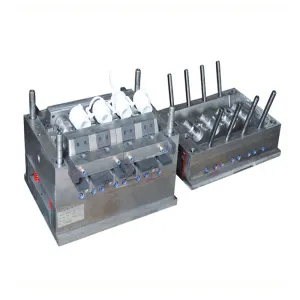
PVC 밸브 본체 파이프 피팅 금형
분류: 볼 밸브 피팅 금형조회수: 636번호:릴리스 시간: 2025-09-17 00:25:33PVC 밸브 본체 파이프 피팅 금형금형 이름:PVC 밸브 본체 파이프 피팅 금형공동: 4개의 공동금형 크기: 50mm금형강: 캐비티 및 코어용 2316게이트:직통 게이트금형 구조:Anple 핀코어/캐비티 경도: 진공 열처리 후 HRC 40-45°사출성형기 : 320T Taizhou Huangyan Hong Jin Mold Co., Ltd는 2002년에 설립되었습니다. 우리는 23년 이상 동안 파이프 피팅 금형을 설계하고 제조하는 전문 기업입니다.우리는 당신과의 오랜 협력을 기대하고 있습니다. 파이프 피팅 금형 정보 처리 : 주문 → 도면 → 금형 설계 → 금형 강 준비 → 검사 → 플라이 커팅 금형 프레임 → CNC 금형 프레임 → 금형 캐비티의 거친 CNC 가공 → 수선 드릴링 → (담금질) → 금...
뉴스
범주:
-
[industry news]CPVC 파이프 피팅 금형이 내구성 있는 플라스틱 부품에 필수적인...
2024-09-05 21:45:07
케이스
범주:

비디오
범주:
검색 결과가 없습니다!
다운로드
범주:
검색 결과가 없습니다!
모집
범주:
검색 결과가 없습니다!
추천 제품
검색 결과가 없습니다!




 왓츠앱
왓츠앱 핸드폰
핸드폰